Guide · intermediate
How to train for the sleds without a sled
You can prepare for the sled push and pull without owning a sled, but try to use a real one before race day.
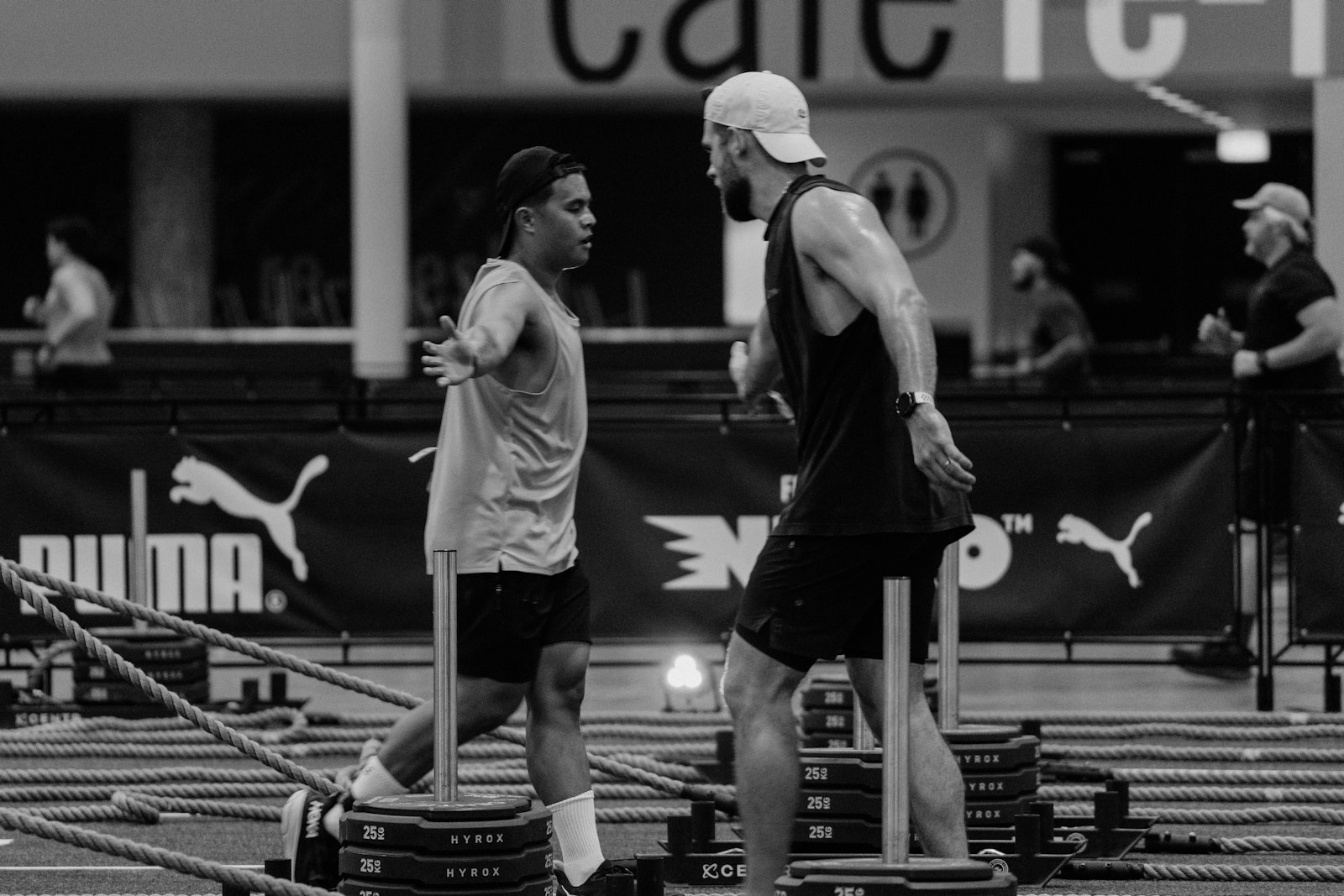
The sled push and sled pull are hard to reproduce in a regular gym, but you can build the leg strength, pulling capacity and work tolerance they demand. If you are preparing for a race without regular sled access, use the exercises below to train those qualities, and look for a chance to practise on the real equipment.
In the race format, both stations cover 50 metres and come early, straight after the SkiErg. The weight depends on your division, and the listed load includes the sled, so check your category before deciding what to prepare for.
Build strength for the push
The push asks you to produce force while moving forward under load. Squats, split squats and step-ups strengthen your legs, and short, controlled efforts on an incline treadmill add walking under fatigue. Use a treadmill only as its manufacturer intends, and do not force a powered belt with the motor off unless the machine is designed for it.
A simple starting session is three sets of eight controlled step-ups per leg, followed by three sets of eight split squats per leg. Choose a load that lets you keep your balance and finish with good form. Rest between sets, and adjust the work to your experience.
There is no reliable way to convert a dumbbell weight or treadmill incline into the resistance of a race sled. Use these exercises to build capacity, then learn the movement on a sled when you can.
Practise pulling under fatigue
Rows, cable pulls and rope work develop the upper-back and grip strength the pull needs. If your gym has a cable station, try standing cable rows with a steady hand-over-hand rhythm, keeping enough tension on the handle to control every rep.
The pull also needs a braced, controlled body position. Read the station guide and the current rules before you practise, paying attention to the equipment, lane and movement standards you will meet on race day.
Add running after strength work
A session does not need to recreate the whole race to be useful. After a short warm-up, try three rounds of a comfortable 400-metre run, eight step-ups per leg and eight cable rows. Rest long enough to keep the next round controlled, and stop or reduce the load if your form slips.
This is an example session, not a prescribed pace or a replacement for an individual plan. If you are new to running or strength training, start with less and build gradually. Our guide to training without the kit has substitutions for the other stations.
Find one chance to practise
A gym day pass, a coached class or a session with a training partner can give you time on a real sled. Notice the surface, how the sled starts moving and how quickly you recover for the next run. Conditions vary, so treat the session as a chance to learn the movement, not a promise of how race day will feel.
Frequently asked questions
Can I race without sled training?
You can train the strength and pulling patterns without a sled, but the alternatives do not reproduce the equipment or the surface. If you can, practise on the real station before your race.
How heavy is the sled?
The load depends on your division. Check the published weights and your event's current rulebook, and note whether the stated load includes the sled.
Sources
- 01The Fitness Race: format, stations and weights, HYROX. Checked Invalid Date.
Spotted an error? Tell us. Corrections are noted on the page. See our editorial standards.